The Quarry
Lake System
Is In Crisis
Stone Lake, Boulder Lake, and Heritage Bay are being overtaken by filamentous algae and invasive aquatic weeds. This is not a cosmetic issue — it is an ecological emergency with direct consequences for property values, water quality, and the long-term viability of our community's most visible amenity.
Underwater Survey — February 2026
See It For Yourself
Unedited GoPro footage from the Quarry Lake system. No humans, no narration — just the lake bottom.
UNDERWATER SURVEY · Stone Lake, Boulder Lake, Heritage Bay · Feb 2026 · All audio removed · Human subjects removed
System Status — February 2026
Lake Health Dashboard
Total Phosphorus
ppb (Boulder Lake)
Optimal range: 25–49 ppb
Vegetation Coverage
of lake bottom
Healthy target: < 20%
Years of Decline
documented degradation
Accelerating since 2020
Lake Status
Boulder Lake
Lake Status
Stone Lake
Lake Status
Heritage Bay
Chapter 01 — The Problem
What You're Looking At
Beneath the Surface
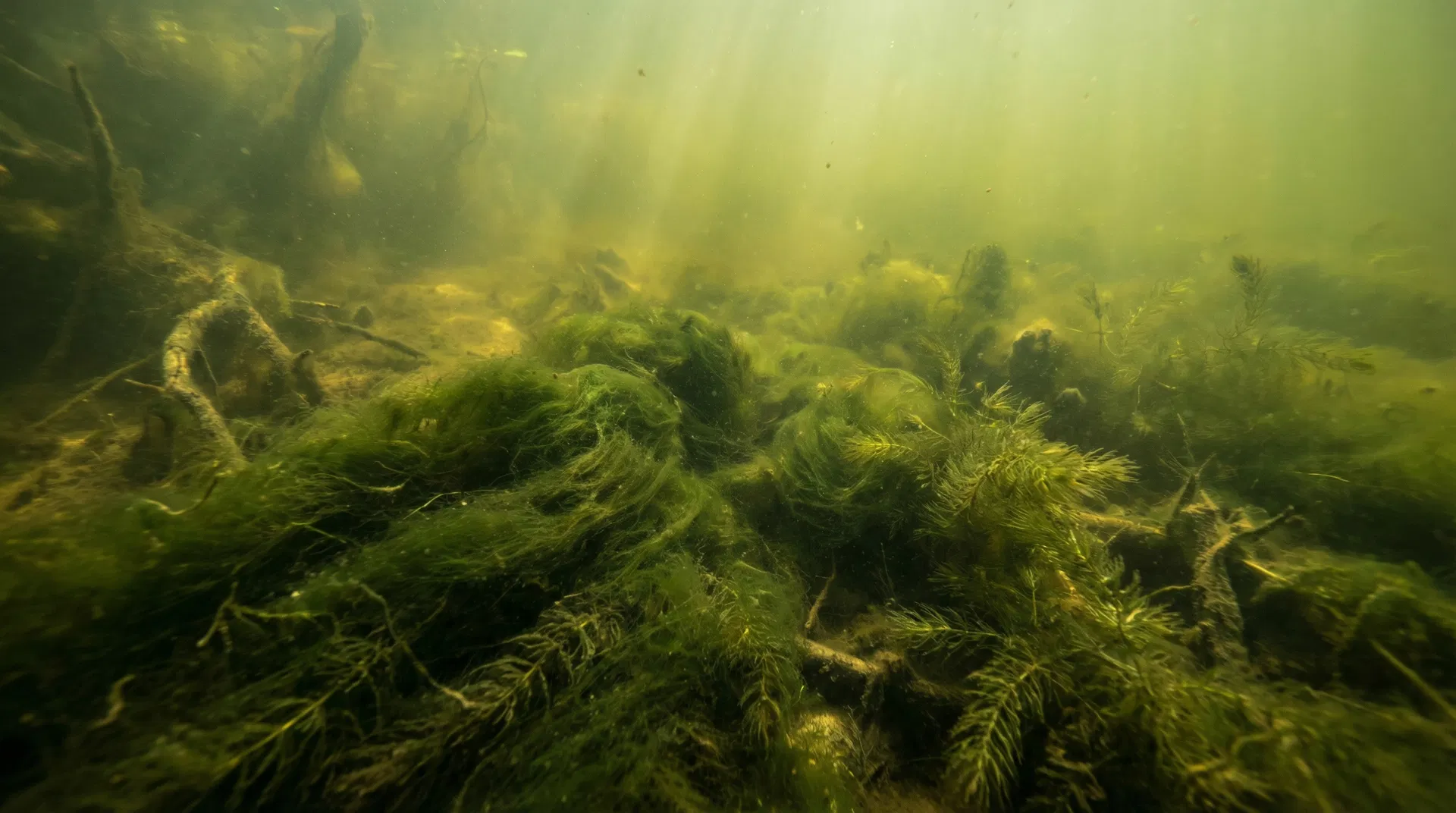
The underwater footage captured in early 2026 tells a story that is invisible from the shoreline. The lake bottoms of the Quarry system are no longer sandy, open ecosystems teeming with fish and native aquatic life. They are carpeted — wall to wall — with a dense, suffocating mat of filamentous algae and Coontail (Ceratophyllum demersum).
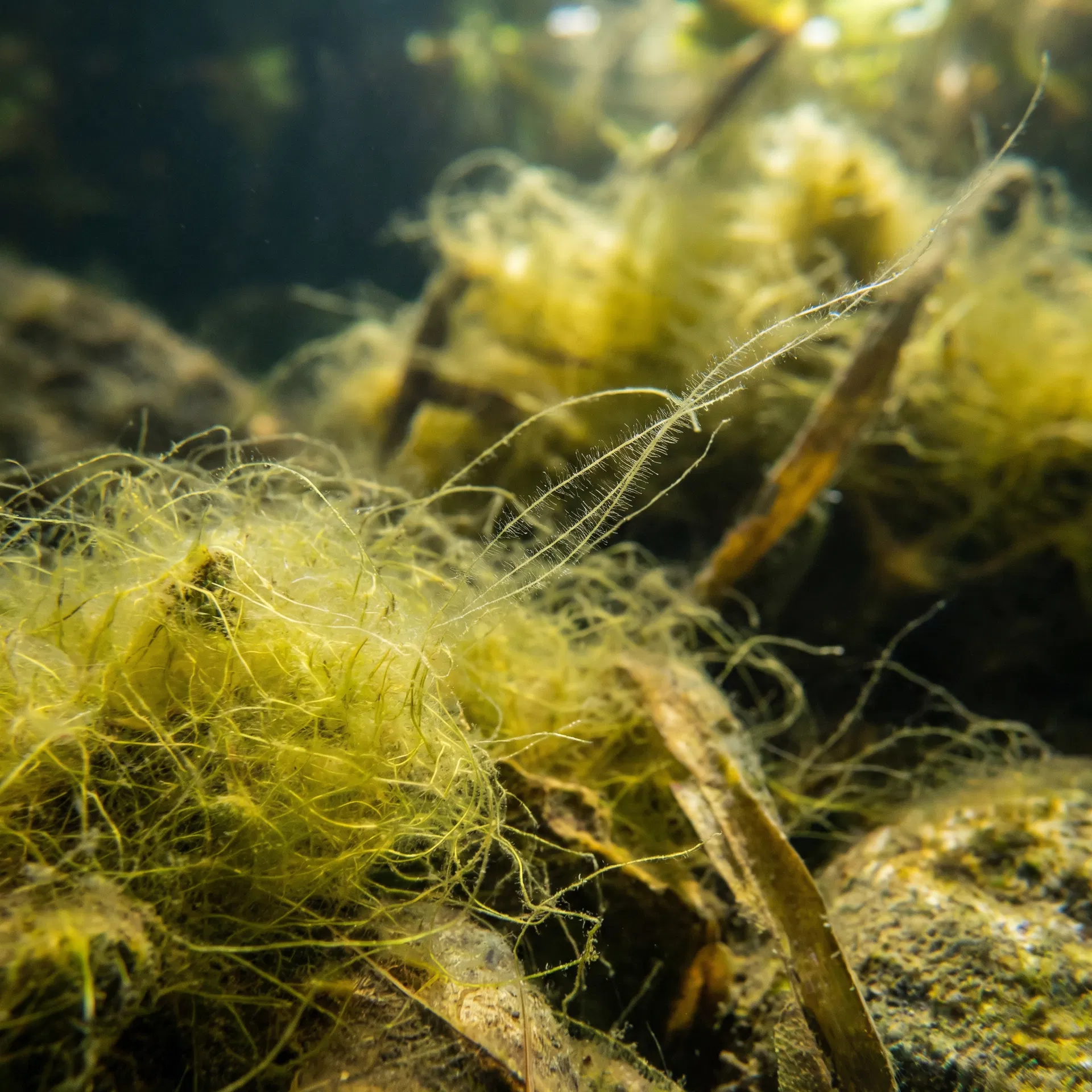
Filamentous algae forms long, thread-like chains that intertwine into thick mats resembling wet wool. It begins on the bottom in shallow water and, as it grows, traps gases that cause it to rise and form floating surface mats. Coontail, a rootless submerged plant, grows in dense, bushy colonies that crowd out all other aquatic life.
Together, these two species have created a monoculture. The biodiversity that once characterized these lakes — the varied fish populations, the native plants, the invertebrates — has been displaced. What remains is a biologically impoverished system that is, in ecological terms, dying.

ACTUAL FOOTAGE — Quarry Lake System, Feb 2026 · GoPro Underwater Survey

ACTUAL FOOTAGE — Note the complete absence of open substrate. The entire bottom is covered.
Primary Offender
Filamentous Algae
Multiple species (likely Cladophora and Pithophora). Forms dense, cotton-like mats. A direct and rapid indicator of excess phosphorus and nitrogen in the water column. Thrives in warm, shallow, nutrient-rich water — precisely the conditions in the Quarry system.
Secondary Offender
Coontail (Ceratophyllum demersum)
A rootless, submerged aquatic plant that grows in dense, bushy colonies. Extremely tolerant of low light and poor water quality — meaning it thrives precisely when conditions deteriorate. Competes aggressively with native vegetation and provides poor habitat for sport fish.
Chapter 02 — Consequences of Inaction
What Happens If
We Do Nothing
Eutrophication is a self-reinforcing cycle. Without intervention, each year the conditions become worse, making recovery more expensive, more difficult, and eventually impossible. The following consequences are not hypothetical — they are the documented outcomes for lakes in this condition.
Property Value Decline
Homes with lake views command a significant premium in The Quarry. Studies consistently show that visibly degraded water bodies — with algae mats, murky water, and odor — reduce adjacent property values by 10–25%. As the lakes continue to deteriorate, this premium erodes.
Complete Fishery Collapse
CRITICALThe 2025 electrofishing study already shows a severely imbalanced fishery with poor bass populations. As dissolved oxygen levels drop due to algae decomposition, fish kills become likely. The recreational fishing that residents value will cease to exist.
Toxic Algae Blooms
CRITICALEutrophic lakes with high phosphorus are prime candidates for cyanobacteria (blue-green algae) blooms. Some strains produce microcystin, a potent liver toxin dangerous to humans, pets, and wildlife. Once cyanobacteria establish, they are extremely difficult to eradicate.
Mosquito & Pest Proliferation
Dense algae mats and stagnant, oxygen-depleted water create ideal breeding habitat for mosquitoes and other pests. This directly impacts the quality of outdoor life for all Quarry residents, not just those on the water.
Exponentially Higher Remediation Costs
Early-stage intervention costs a fraction of what advanced eutrophication remediation requires. Dredging, alum treatments, and whole-lake restoration programs can cost hundreds of thousands to millions of dollars. Every year of delay increases the eventual bill.
Irreversible Ecological Shift
CRITICALLakes can cross a 'tipping point' into a permanently turbid, algae-dominated state known as an alternative stable state. Once this occurs, restoration to a clear-water ecosystem requires extraordinary intervention — and may not be achievable at any cost.
Chapter 03 — Root Causes
How We Got Here:
The Eutrophication Story
The crisis in the Quarry Lake system did not happen overnight. It is the result of a decade-long accumulation of excess nutrients — primarily phosphorus — that has progressively enriched the water to the point where nuisance vegetation can grow unchecked.
This process, called eutrophication, is the single root cause of everything observed in the underwater footage and confirmed by the professional lake management reports. Phosphorus acts as a fertilizer for algae and aquatic weeds. The more phosphorus enters the lake, the more aggressively these plants grow.
The professional assessment by SOLitude Lake Management (February 2025) measured total phosphorus above the optimal range in all three lakes: Stone Lake at 72.4 ppb, Boulder Lake at 96 ppb, and Heritage Bay at 77.6 ppb. The optimal range for a productive fishery is 25–49 ppb — meaning all three lakes are running at roughly twice the recommended upper limit. Stone Lake’s sediment phosphorus also measured 135 ppm, above the <100 ppm threshold, indicating internal loading from the lake bottom itself. These levels do not occur naturally. They are the direct result of human activity in the surrounding watershed.
Golf Course Fertilizer Runoff
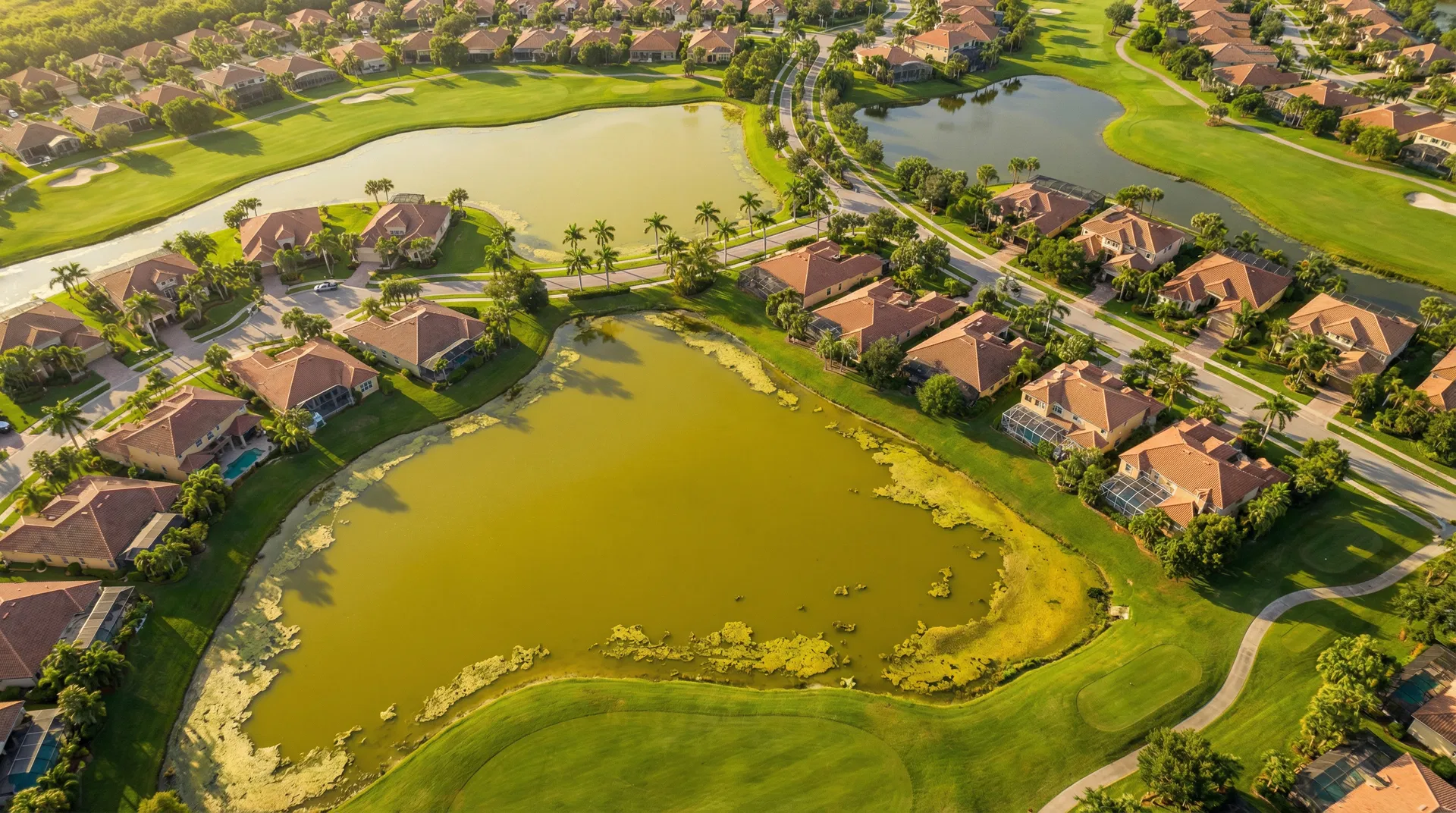
The golf course that borders the lakes applies significant quantities of nitrogen and phosphorus-based fertilizers to maintain its turf. During rain events, these nutrients wash directly into the lake system. This is the single largest suspected source of nutrient loading.
Residential Landscape Runoff
Homeowners applying lawn fertilizers contribute to the nutrient load. Without vegetated buffer zones along the shoreline, rainwater carries these nutrients directly into the lakes with no filtration.
Loss of Native Shoreline Vegetation
Native aquatic and riparian plants along the shoreline act as a natural filter, absorbing nutrients before they reach open water. The replacement of natural shorelines with manicured grass to the water's edge has eliminated this critical buffer.
Internal Nutrient Cycling
Decades of accumulated organic matter on the lake bottom — decomposing algae, dead vegetation, and sediment — now release phosphorus back into the water column. This 'internal loading' means the lakes are self-fertilizing, even if all external inputs were stopped today.
Imbalanced Fish Population
The electrofishing study reveals a fishery dominated by small, rough fish and lacking sufficient predatory bass. A healthy bass population controls smaller fish that stir up sediment and release nutrients. Without this balance, the nutrient cycle accelerates.
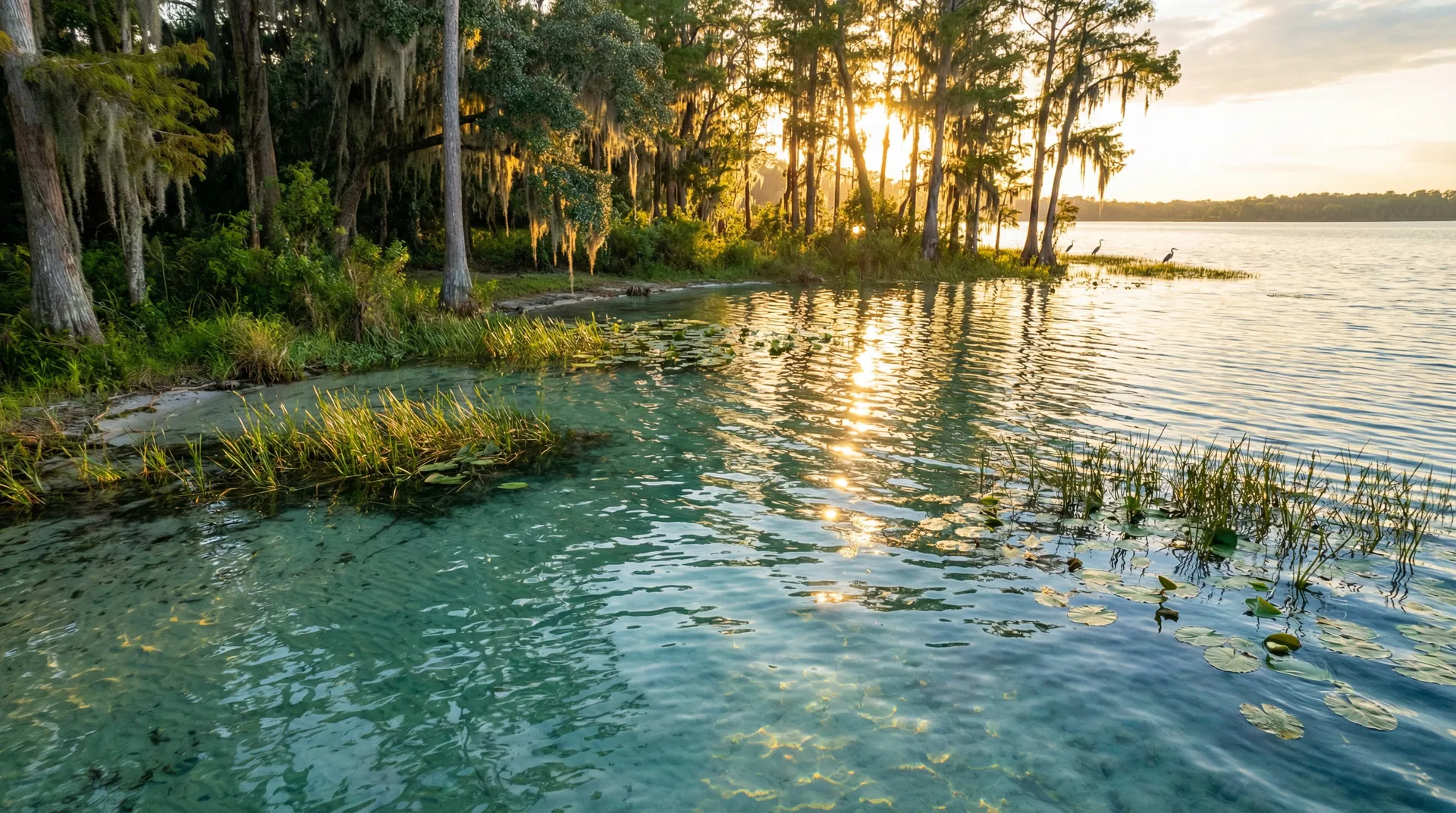
WHAT WAS — A Healthy Florida Lake
Clear water, visible sandy bottom, native aquatic plants, thriving fish populations, and a balanced ecosystem.
WHAT IS — The Quarry Lake System Today
Murky, nutrient-saturated water. Complete bottom coverage by filamentous algae and coontail. Compromised fishery.
Chapter 04 — Action Plan
What Must Be Done
Right Now
The good news is that eutrophication is reversible — if addressed with urgency and a comprehensive, multi-pronged strategy. The following actions are grounded in the professional assessments already commissioned by the community and in established best practices for Florida lake management.
Commission a Full Nutrient Budget Study
IMMEDIATEBefore any treatment can be optimally designed, the community needs to know exactly how much phosphorus is entering each lake and from where. A nutrient budget study will quantify inputs from the golf course, residential areas, and internal sediment loading. This is the diagnostic foundation for everything else.
Conduct a Trial Herbicide / Algaecide Application
IMMEDIATESOLitude's report recommends a small-scale trial application before committing to a full treatment program. Copper-based algaecides target filamentous algae; herbicides containing Diquat or Endothall are effective for Coontail. A trial will confirm efficacy and allow for cost estimation before full-scale treatment is authorized.
Implement Golf Course Fertilizer Best Management Practices
IMMEDIATEEngage the golf course management immediately to implement Florida-DEP-approved Best Management Practices (BMPs) for fertilizer application. This includes buffer zones, slow-release formulations, and application timing restrictions to prevent runoff into the lake system. This is the single most impactful source reduction measure available.
Restore Native Shoreline Buffer Zones
SHORT-TERMEstablish a minimum 10-foot native plant buffer along all lake shorelines. Native plants such as pickerelweed, blue flag iris, and native grasses are highly effective at absorbing nutrients from runoff before it reaches the water. This is a cost-effective, permanent, and visually attractive solution.
Execute the Fishery Restoration Plan
SHORT-TERMImplement the fish stocking and management plan recommended in the electrofishing study. Restoring a healthy, predator-dominated fishery is a critical component of long-term lake health. A balanced fish population provides biological control of conditions that fuel algae growth.
Evaluate Alum Treatment for Internal Phosphorus Loading
SHORT-TERMGiven the extent of internal nutrient loading from decades of accumulated sediment, an alum (aluminum sulfate) treatment should be evaluated. Alum binds phosphorus in the water column and sediment, preventing its release. This is a proven, widely-used technique for eutrophic Florida lakes.
Establish an Annual Monitoring Program
LONG-TERMImplement a formal annual water quality monitoring program with standardized testing of phosphorus, nitrogen, dissolved oxygen, and vegetation coverage. This creates accountability, tracks the effectiveness of interventions, and provides early warning of future problems before they become crises.
Evaluate Aeration System Installation
LONG-TERMSubmersed aeration systems destratify the water column, increase dissolved oxygen, and reduce the anaerobic conditions at the sediment surface that drive internal phosphorus release. For shallow, eutrophic lakes like those in the Quarry system, aeration is a valuable long-term management tool.
Community Updates
Stay Informed About
Our Lakes
The health of Stone Lake, Boulder Lake, and Heritage Bay affects all of us in The Quarry community. If you'd like to be kept informed as we learn more — including updates from lake management professionals, CDD meetings, and water quality results — leave your name and email below.
This is simply a way to stay in the loop. Your information will not be shared with any third parties, and you can unsubscribe at any time.